History of personality theory
What happened with intepretation of person
Goran Kardum
Some definition of personality
- Personality psychology: study of patterns of thoughts and behaviors that make each individual - unique
- Personality trait: consistent pattern of thought and behavior
A person
- We have devoted our lives to the scientific study of personality.
- We believe this sub-discipline, the scientific study of what it means to be a person, is one of the most exciting parts of psychology. (Larsen & Buss, 2021)
- Personality is particularly associated with individuality (Hroar, 2019)
Person vs. Character
- etymology
- history
- Personality: the center term in psychology of 20th century! Did not exist before!
Character
- In use before 20th century!
- Greek: χαραϰτήρ
- The particular combination of qualities in someone or something that makes them or it different from others (Cambridge dictionary)
- The quality of being determined and able to deal with difficult situations: strength of character She has such strength of character.
- Personality is a significantly more neutral concept than character, which carries a significantly higher moral component, of good and evil (Hroar, 2019)
Why personality theory?
- Individuality: Many associate this aspect with French psychologist Alfred Binet, who coined the term individual psychology, as well as with Francis Galton and William Stern, who both focused on individual differences in a systematic way (Hroar, 2019).
- Personality tries to capture individuality (research, practice, counselling, psychotherapy), which is also the core of psychology.
- Gordon Allport, probably the most important contributor to the development of personality psychology, was very conscious of the importance of individuality.
Personality and the Self
- Self: after personality, the self appeared to replace “personality”
- The big changes that took place in European culture from the Enlightenment time to the 20th century
- This was the time when the term consciousness replaced the term mind, which also had replaced the term soul a hundred years earlier (Hroar, 2019)
What study psychology of personality?
According to Larsen & Buss (2021), Kluckhohn and Murray, in their 1948, book on culture and personality, in which they state that every human being is, in certain respects,
- like all others (the human nature level),
- like some others (the level of individual and group differences), and
- like no others (the individual uniqueness level).
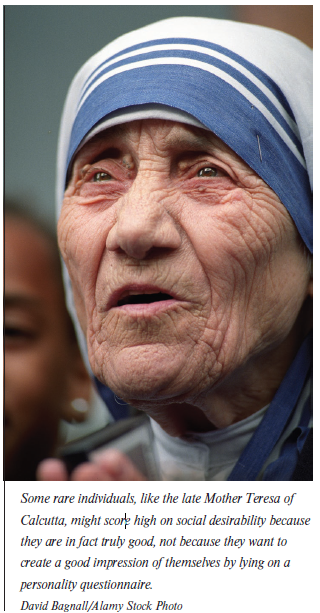
Social desirability, figure from Larsen & Buss (2021)
History of individual differences
- History of personality
- History of psychological assessment (i.e. intelligence: A. Binet (1857-1911), C. E. Spearman (1863-1945), J. P. Guilford (1897 – 1987) )
First textbook about personality
- First textbooks on personality Gordon Allport (1937) and Henry Murray (1938)
- Allport, G. W. (1937). Personality: A Psychological Interpretation. New York, NY: Holt, Rinehart & Winston.
- Murray, H.A. (1938). Explorations in personality. Oxford Univ. Press.
Definition
Personality is the set of psychological traits and mechanisms within the individual that are organized and relatively enduring and that influence his or her interactions with, and adaptations to, the intrapsychic, physical, and social environments. (Larsen & Buss, 2021)
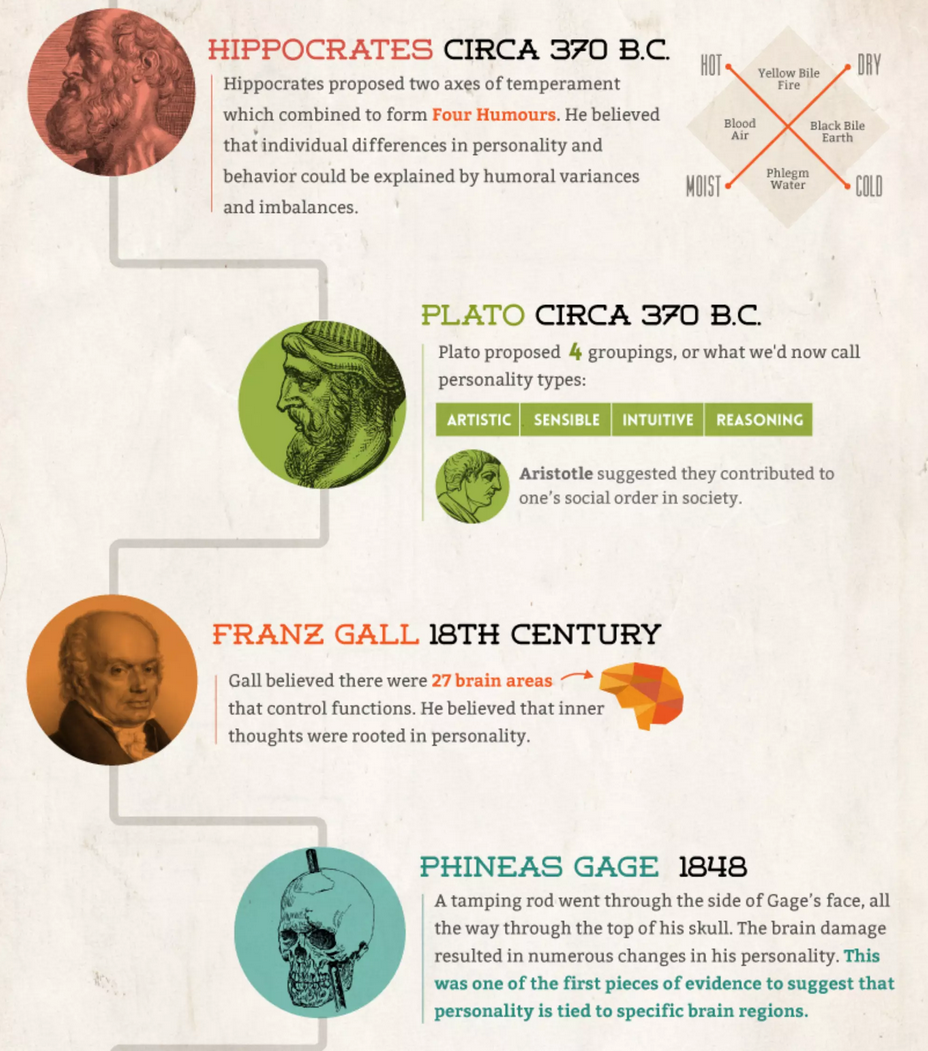
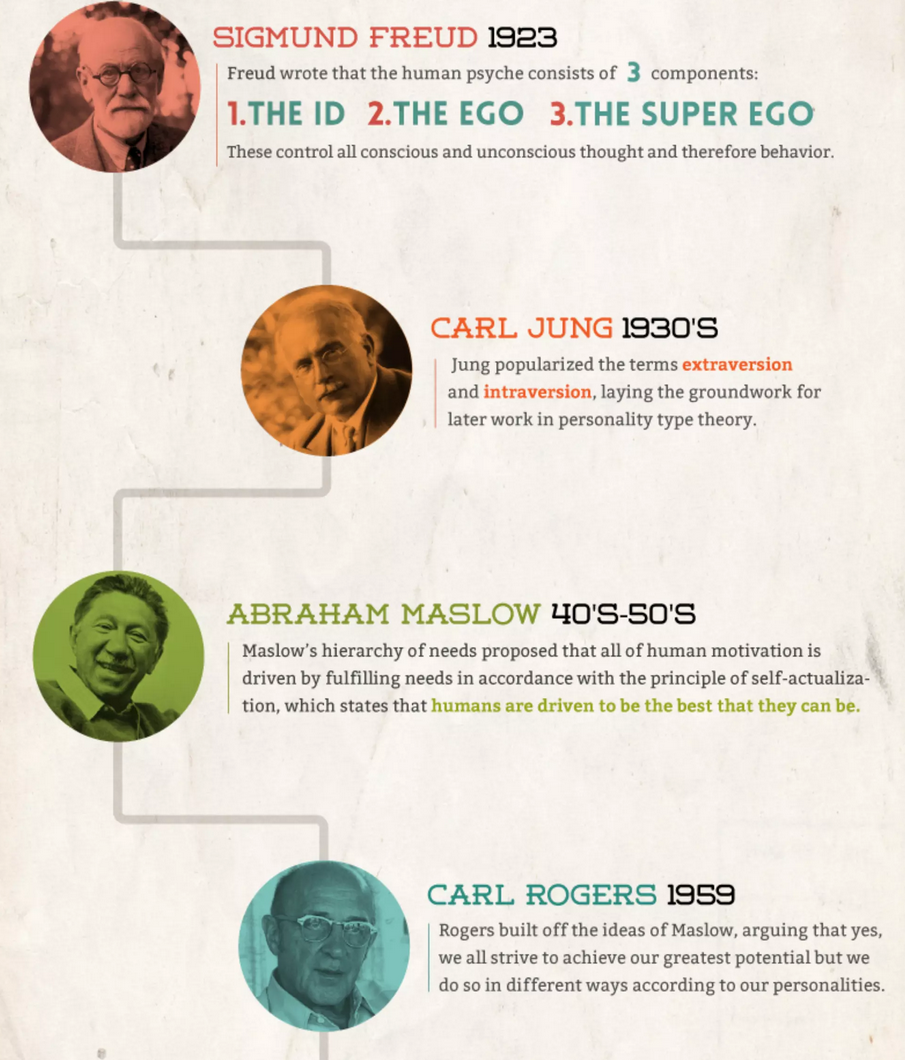
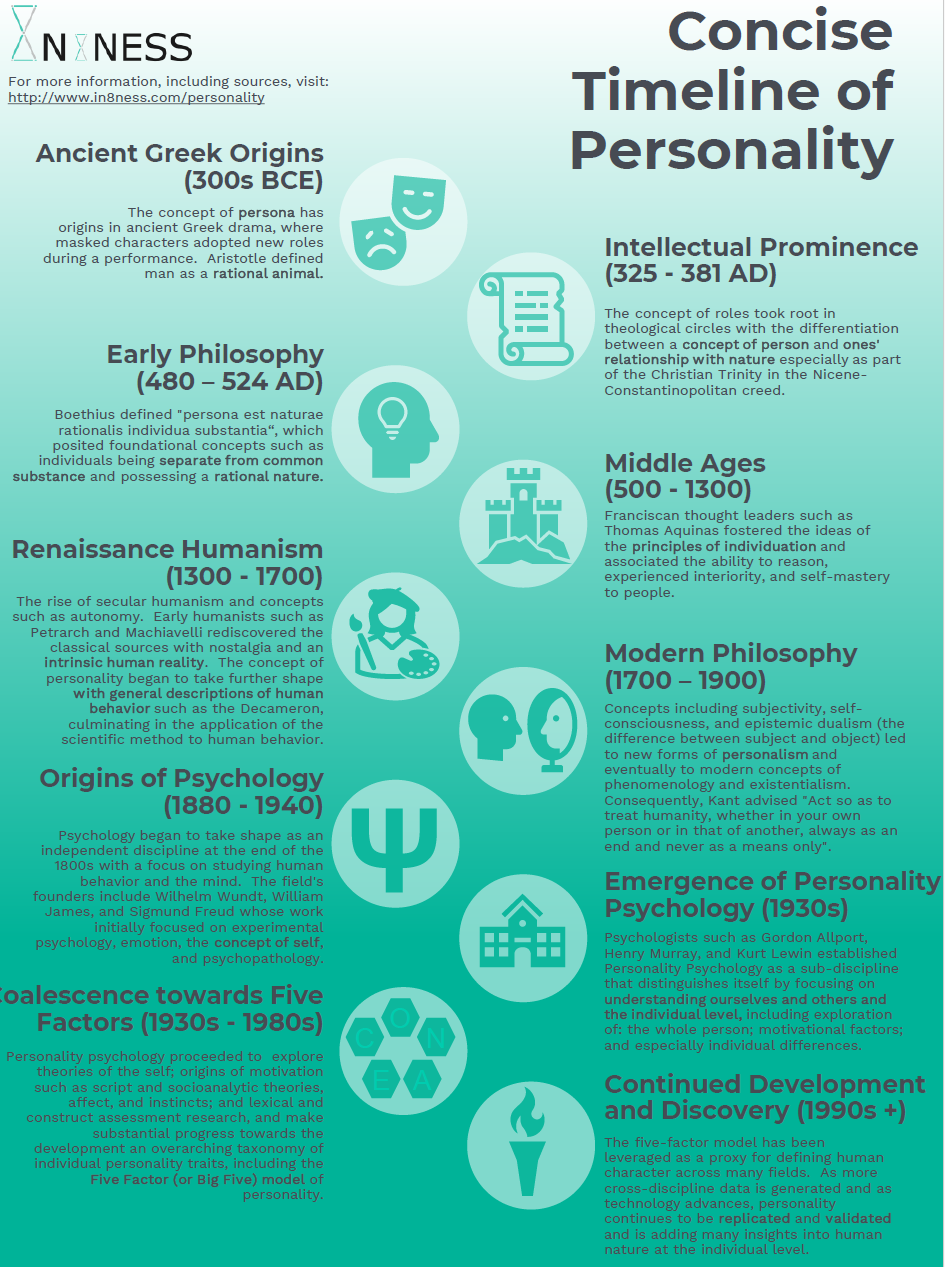
The Big Five
- five-factor model,
- the Big Five,
- The High Five (Costa & McCrae, 1995; Goldberg, 1981; McCrae & John, 1992; Saucier & Goldberg, 1996)
The Big Five
- surgency or extraversion,
- agreeableness,
- conscientiousness,
- emotional stability, and
- openness–intellect.
References
Hroar, K. S. (2019). The Genealogy of personality psychology - why personality became so important. Psychology in Russia: State of the Art, 12(2), 58–68.
Larsen, R. J., & Buss, D. M. (2021). Personality psychology: Domains of knowledge about human nature (7th ed.). McGraw-Hill Education.