Introduction to History of psychology
History of Psychology
The story of psychology begins in ancient times.
As a self-conscious formal discipline, psychology is little more than a century old (1879., first lab in the field of psychology, Leipzig, Wundt)
But the subject matter captured the human imagination long before psychology became a science (empirical science, positivism).
Periods of the history of psychology
- Ancient time
- The period of Christianity, the Middle Ages (Lost Millenium - misunderstanding the Middle Ages), until the Gutenberg (Gutenberg Bible, 1454)
- The period of Enlightenment and reformation (from the 15th/16th century to the 19th century)
- Contemporary period of psychology, empirical psychology, separation from philosophy and development of different directions from the 19th century to the present day
Physics of the soul
Did psychology exist in the eighteenth century? (Vidal, 2011)
- Yes
- The science of the soul (Scientia de anima)
- From the first usage of the term “psychology” (16. century), psychology existed essentially as a “physics of the soul” - belonging to the natural philosophy and Christian anthropology
- Psychology exist as discipline before the Enlightenment
Lectures
Antiquity
Middle ages and the scholasticism
Modern age
Experimental age
Development of different schools of psychology
The world of variables - psychology meta-language
Clinical psychology and the deviations in the behaviour
Lectures and organisation
Roots of Psychology
Roots of Psychology from the context of Philosophy and Religion: Greek Philosophy, Scholasticims, Christianity, Renaissance, Enlightenment to Romanticism (… to the 1/2 of 19. century)
Roots of Psychology in Physiology and Natural Science (19. and 20. century): Physiology roots, Psychophysics, Evolution
Roots of major 20th Century Schools of Psychology
Roots of Psychology
Philosophy and Religion:
Greek philosophy,
Scholasticism,
Christianity, Judaism
Renaissance,
Enlightenment,
Romanticism
Physiology and Natural Science:
Mathematics, Statistics
Biology
Physics
Physiology and Neuroscience
Interesting, intriguing details of individual psychologists (Greenwood)
Aristotle spent his honeymoon collecting biological specimens
Descartes’ skull, of Dr. “Monsterwork” and his lying machine
John B. Watson’s measurement of the female orgasm (the real reason he was fired from Johns Hopkins University).
Some of them deal with parapsychology or psychic experience/experiments: Jung, Ramiro Bujas
Why History of Psychology?
History as a Key to understanding the Future
History offers patterns that, when properly viewed, may prove consequential to our understanding and possible control of the present and the future.
Psychologists who appreciate their history may be in a better position to understand the discipline while anticipating future trends.
Why History of Psychology?
history as a Way to Enrich the Present
We live in a world of spatial, cultural, and temporal dimensions! That is present time…
Unfortunately, we can be just as narrow with respect to our time frame as we are with our knowledge of the physical world and other cultures.
Imagine how it would restrict your view of yourself if you only had memories about the last few years of your life.
Why History of Psychology?
History as a Contribution to Liberal Education
Particularly given the increasing specialization in psychology, history can serve to provide context and a broader perspective within psychology (Benjamin & Baker, 2009).
Knowledge of the history of a discipline accentuates the understanding of influences, developments, and relations and contributes to a more informed and integrated perspective.
Why History of Psychology?
History teaches humility
A perspective from past knowledge is larger and more informed than perspectives from the present alone.
History all too often reveals that our innovative idea is a rediscovery of something known long ago.
Why History of Psychology?
History teaches a healthy Skepticism
When we have an understanding of history, we are less likely to fall prey to grandiose notions, utopian dreams, and schemes that promise more than they deliver.
Psychology has suffered its share of counterfeit ideas, including mesmerism, phrenology, craniometry (the measurement of the skull to determine intelligence and personality), and even some modern therapies.
Why History of Psychology?
History influences human thought processes
Henle (1976) pointed out that most of us find it difficult to see our errors or question our assumptions.
She argued that human cognition is often resistant to criticism and prone to a degree of inertia or self preservation.
For her, knowledge of history “gives us distance not only from our immediate objective, but from our own thinking”
Problems in historiography?
What makes history?
Can history be objective?
Historiography has multiple meanings: it refers to the writing of history, including techniques and strategies for investigating specific content areas.
The term also encompasses philosophical questions about history and historical method
Historical consciousness
Gilderhus (1992) suggests that primitive peoples often lacked historical consciousness because immediate survival was their primary concern, care.
Survival depends on memory along with an awareness of time-based events. This temporal awareness has survival value and contributes to the development of historical consciousness.
Knowledge of the historical significance of events benefits both individuals and society.
Historical consciousness grows from the belief that important events carry real significance in the pursuit of religion, politics, or science (Jesus Christ, Holocaust, 9/11 twins…)
Critical issues in historical studies (King, Viney, Woody, 2016)
Why study history?
History as a Key to Understanding the Future
History as a Way to Enrich the Present
Critical issues in historical studies (King, Viney, Woody, 2016)
History as a Contribution to Liberal Education
History Teaches Humility
History Teaches a Healthy Skepticism
History Influences Human Thought Processes
Some problems in historiography
The Development of Historical Consciousness
What Is History?
Can History Be Objective?
The Tyranny of the Present
Some problems in historiography
Is There a Pattern or Direction in History?
What Makes History?
The New History or the Old?
What Is the History of Psychology, the History Of?
Can history be objective?
People have a kind of commonsense faith that historical research whether it deals with religious, political, scientific, or social topics is an accurate reflection of the landscape of the past.
Historians do not usually make direct observations.
The question of objectivity is a critical issue in the philosophy of history.
Meaning of objectivity involves the attempt to portray all sides of an issue in a fair man- ner, even if something disagrees with the author’s perspective.
Historiography
Study the history of history… such investigations is historiography (principles, methods and philosophical issues of historical researc).
The most influential modern history of psychology was written by Edwin G. Boring (1886-1968).
Boring recognizes two approaches to history: 1) role of the creative individual in moving history along 2) cultural context (Zeitgeist)
Cultural context, Zeitgeist, or spirit of the times; a concept that Boring attributes to the great German poet, philosopher, and naturalist, Johann Wolfgang von Goethe (1749-1832). (Benjafield, 2015)
Problems in the reconstruction (Schultz & Schultz, 2011)
How we study history (principles, research methods, philosophical issues)
Lost or suppressed data
Data distorted in translation
Self-serving data
the Tyranny of the Present
Historians are creatures of the present, but can they free themselves from natural biases im- posed by their world view?
Must have a well-developed empathy for their subject.
Presentism emphasizes the difficulty in divorcing historical facts from current perspectives.
Is there a Pattern or direction in history?
Few hypotheses about the direction of history that are applicable to the history of psychology.
Cyclical hypothesis claims that history repeats itself. Cycles exist in every science, and psychology has seen its share.
For example, neuroscientists in the twentieth century wondered if the right and left hemispheres of the brain mediate different emotional and intellectual processes, or do the hemispheres function in a more integrated fashion? Interest in lateralization of function in the cerebral hemispheres is not new.
Paradigm? 18.10.
Thomas Kuhn’s (1970) The Structure of Scientific Revolutions changed the way that the history of science was understood by psychologists (Sternberg & Pickren, 2019).
Kuhn argued that the history of a particular science was not a continuous accumulation of knowledge - rather it was punctuated by discontinuities.
From time to time there are paradigm clashes, at the end of which the subject is fundamentally reorganized and a new paradigm is put into place. (Examples of such restructurings are the Einsteinian revolution in physics and the Darwinian revolution in biology). (Sternberg & Pickren, 2019)
Paradigm?
The set of the fundamental beliefs that guide workers in a scientific discipline is called a paradigm.
Kuhn argues that paradigms shape the scientist’s view of the world.
During time: there can be paradigm clashes fundamentally different ways of interpreting the data.
Paradigm?
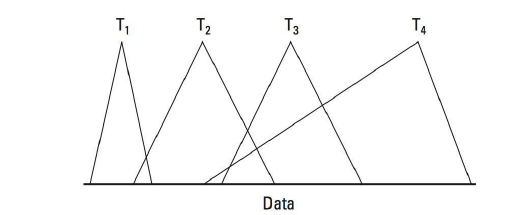
Different theoretical viewpoints in psychology (Benjafield, 2015)
Linear progressive hypothesis
Each generation builds upon discoveries from previous generations.
Each new generation works up from a stronger base, giving rise to growth and progress in human knowledge and among human institutions.
The German mathematician Gottfried Wilhelm Leibniz was the best-known modern champion of progress theory.
Chaos hypothesis
It became clear that the entire structure of human achievement could be brought to ruin by a chance technological accident or by the design of political systems deficient in world perspective.
According to the chaos hypothesis, history itself has no overall identifiable and universal meaning.
For some, psychology is the product of a chaotic history. Koch argued that psychology’s history is “a succession of changing doctrines about what to emulate in the natural sciences—especially physics”.
What makes history?
We turn now to an issue of controversy among historians, one that holds special relevance for students of psychology.
The central question here asks whether history is fashioned through the bold actions of exceptional people or the “spirit of the times” in which they live. The great-person theory suggests that uncommon individuals transcend the conditions of their day and shape history through their courage or wisdom or some other virtue.
In contrast, the German terms Zeitgeist (spirit of a time) and Ortgeist (spirit of a place) argue that prevailing conditions, not individuals, forge historical events. The idea is that no person is greater than his or her time.
Philosophical issues
Epistemology,
Problem of Causality,
Free Will and Determinism,
The Mind-Body Problem,
The Problem of Explanation
Epistemology
The term epistemology is derived from the Greek episteme, which means to understand or to know. Epistemology is a branch of philosophy concerned with theories of knowledge.
A priori and a posteriori knowledge
Nativism versus Empiricism
Instinct versus Learning
Epistemology
Criteria by which we claim to know Truth?
The Role of Emotions in Knowledge
Science and Epistemology
Relevance of Epistemology to Psychology
A priori and a posteriori knowledge
- The philosophical term a priori comes from the Latin meaning “from what is prior” or “from what comes before.”
- a posteriori means “from what comes later.”
- Immanuel Kant (1724–1804), a posteriori refers to that which is derived from or comes after experience and a priori refers to self-evident truths that come before experience.
- If A is larger than B and B is larger than C, then A is larger than C. The claim can be made that the truth of the proposition is known a priori.
- That is, without experience, we would not even know about the proposition.
Nativism vs. Empiricism
Nativism holds that some perceptions are operational from birth, built in as a natural outcome of the structural and functional properties of the nervous system.
Empiricism holds that all perceptions are learned or developed from experience.
Instinct versus Learning
- Many early psychologists stressed the role of instincts in human and animal psychology.
- Behaviorists replaced instinct theories with an emphasis on learning. Behaviorism assumed that we learn to be aggressive, we learn to be inquisitive, and we learn to be good parents.
Criteria by which we claim to know Truth?
On what grounds can we claim to have knowledge?
- Authority: Reference to authority is the most common method of assessing truth.
- During childhood, we incorporate the values, beliefs, and judgments of our parents.
- Man for Himself, psychologist Erich Fromm (1900–1980) provided a thoughtful analysis of the problem of authority: the great sin in authoritarian epistemology is to become too much like the authority.
- The history lots of examples of authoritarian abuse: for example: The 1978 mass suicide of over 900 Americans in Jonestown, Guyana (see Time, 1978), is a tragic example of abusive authoritarian control
Criteria by which we claim to know Truth?
Empiricism
- The term empiricism is derived from Greek and Latin terms that were close in meaning to our word experience.
- Knowledge is based on observable facts represented in experience.
- John Locke (1632–1704) argued that there is nothing in the intellect that was not previously in the senses.
- Francis Bacon (1561–1626) has been called the Great Herald of the Empirical Spirit because of his campaign to encourage observation and data collection.
- Problems: sensory information can be unreliable.
Criteria by which we claim to know Truth?
Rationalism
- The term rationalism comes from the same Latin root as the term reason.
- Rationalists argue that the mind has innate organizing principles so information from the senses is filtered and patterned in ways that are built into the organism.
- Rationalists believe sensory information alone is not an adequate basis for knowledge.
- Early philosophers and scientists such as Descartes, Galileo, Leibniz, and Kant belonging to rationalism.
- Christian Wolff (1679-1754) wrote a book 1732 titled Empirical Psychology; two years later, he wrote a complementary book titled Rational Psychology.
Criteria by which we claim to know Truth?
Aestheticism
- Aestheticism is a doctrine that the principles of beauty apply to other arenas of thought.
- Aestheticism is an epistemology or way of knowing; for aestheticists, inquiry itself is a search for truth and beauty. This perspective is well illustrated in the book The Double Helix by Watson (1968).
- The aesthetic test has been of historical importance in the humanities— especially in art and music.
Criteria by which we claim to know Truth?
Pragmatism
- The term pragmatism is derived from a Greek root translated as pragma, which refers to “things accomplished” or “things done.”
- Francis Bacon believed we should emphasize theories and propositions that can be tested.
- Immanuel Kant used the term pragmatic to refer to that which is prudent.
- Under the late nineteenth-century leadership of Charles Sanders Peirce (purse) and William James, pragmatism became a major philosophical movement.
- In typical American fashion, James talked about the “cash value” of an idea.
- Problem with pragmatism is that an idea or concept may appear sterile or unworkable in the present intellectual context, but may yield important truths at a later time.
- The Copernican model of the solar system appeared unworkable at first, but later revolutionized our knowledge of astrophysics.
Criteria by which we claim to know Truth?
Scepticism
- All truth claims are suspect and must be questioned.
- Skepticism, as a method of discovering problems, can offer a potent source of progress and knowledge.
- A society that discourages critical analysis and skepticism risks freezing the knowledge industry.
- In contrast, a society that encourages a skeptical ethic along with an evolutionary epistemology will be dynamic and open to the discovery mission (Harrison, 2006).