Emergence of Psychology from 1520
Goran Kardum
- Today’s task: read a short text about the first appearance of the term psychologia
We cannot understand contemporary psychology without first researching its history (Sternberg & Pickren, 2019)
The myth
- Psychology that have repeated over a century the self-preserving story of psychology as science beginning in 1879 with the establishment of Wilhelm Wundt’s laboratory in Leipzig (Jaan Valsiner, Denmark, 2020 in Preface of Klempe’s book in 2020.)
On the Soul (De Anima)
- Relationship between sensation and thinking
- Precursor of - cognitive psychology
- The soul is somekind of synonimus for the life - because of that - when a person dies, the soul also dies (according to Aristotle)
Pythagorean Platonic tradition (Klempe, 2020)
During the Middle Ages
- Aristotle: attention to sensation and thinking
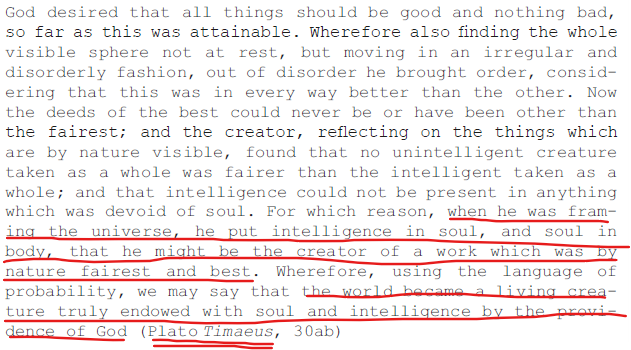
- Plato: a dominant position within theological thinking
- Important of Christian tradition: St. Augustin (354-430), Evagrius Ponticus (345-399), John Cassian (360-435), Hildegard of Bingen (1098-1179), St. Thomas Aquinas (1225-1274)
- Important of the body research: theory of the four humours, emotions and body processes
- Spiritu et Anima (Cistercian monk ? from the 12th century): important work that connect emotion and cognition.
At the begining of 16th century
- There was no focus on behavior in the beginning centuries of psychology (sixteenth to nineteenth) (Klempe, 2020)
- Complex context: The Fifth Lateran Council (1512–1517) about soul! and the birth of Protestantism
- Psychology emerged by the Protestant Reformation in Europe in the sixteenth century? Is it true?
- Psychology as growing out of philosophy
- Philosophy, astrology, astronomy, alchemy, and medicine were all closely tied together in the sixteenth century
Key figures of the 16th century
- Marko Marulić (1450-1524)
- Pier Nicola Castellani
- Gerardus Synellius (Synel, Snellius, Schnell; born 1470 in Groningen, Niederlande; † 8. Juni 1552 in Norden, Ostfriesland)
- Philipp Melanchton (1497-1560)
- Johann Thomas Freigius (1543-1583)
- Rudolf Goclenius the Elder (1547–1628) and his student..
- Otto Casmann (1562-1607)
Sven Hroar Klempe
- The professor at NTNU
- The author of the famous book: Tracing the Emergence of Psychology, 1520–1750 A Sophisticated Intruder to Philosophy
- He explained the long journey for that book: started at 1999.
- He highlight the importance of “Protestant Scholasticism” and important of Christian Wolff
- He pointed out the wrong interpretation of Wilhelm Wundt
- Historian Fernando Vidal briefly states that the term psychology originated in the writings of Protestant Scholastics
Who coined the term: Psychologia?
- The oldest historical source we have where “psychology is used around 1520 when the Croatian humanist and poet Marcus Marulus (1450–1524) published a manuscript Psichiologia de ratione animae humanae with this term included in the title (Klempe, 2020; Krstić, 1964)
- Oldest preserved publication with “psychology” in the title is an anthology published in 1590 by the philosopher Rudolf Goclenius the Elder (1547–1628). He was central to the first Protestant University (Philipps-Universität in Marburg), which was established in 1527 by Landgrave Philipp of Hesse.
- But… the most important is not the appears of psychology for the first time… The most important is context in which it appears!
Marko Marulić
- Born in Split on 1450 and lived until 1524; a key figure of the Dalmatian Renaissance
- He wrote extensively in both Latin and Croatian, combining classical humanist ideals with Christian morality and patriotic themes
- His most famous Croatian work is the epic poem Judita (published in 1521)
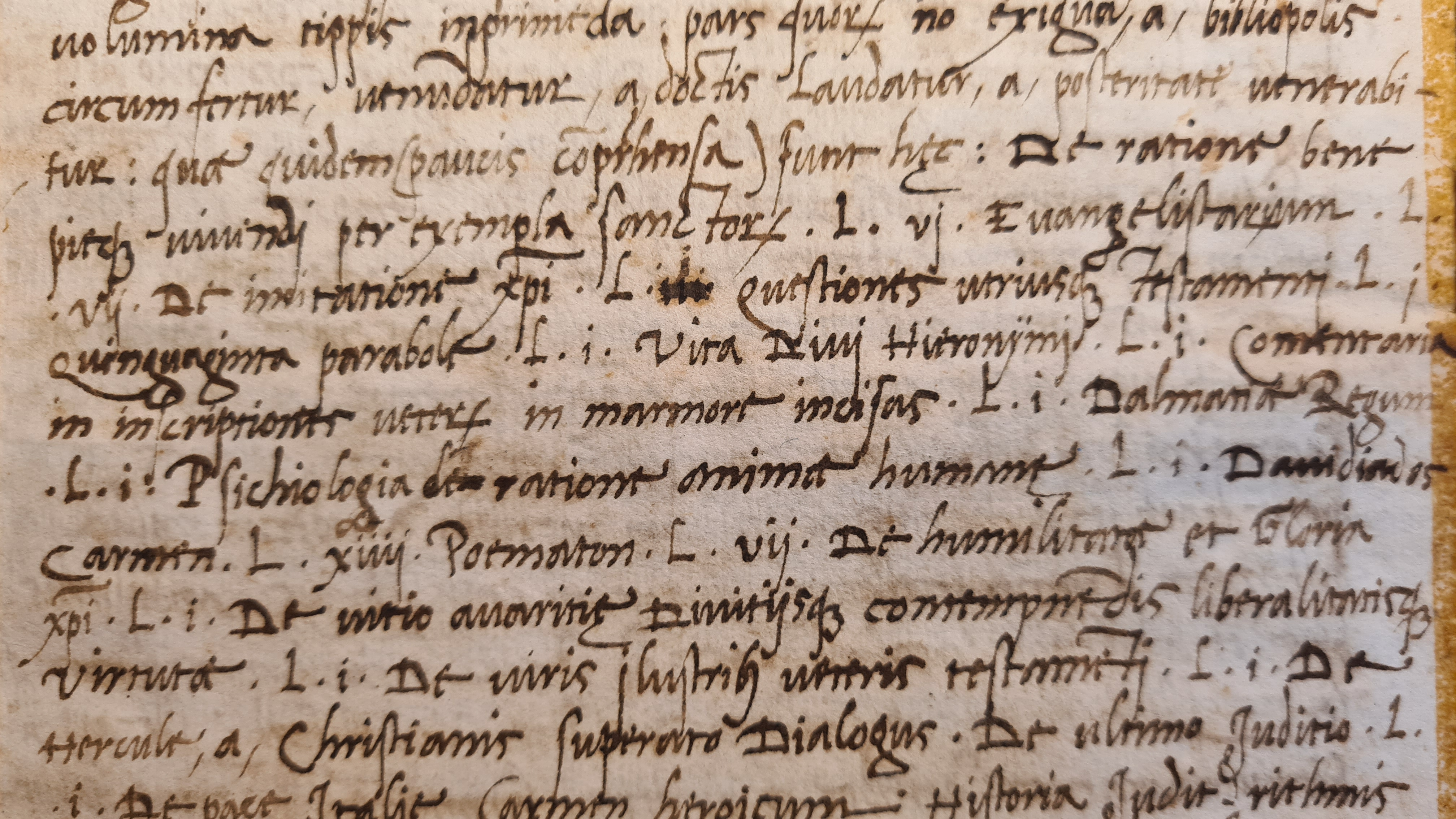
- Around 1520 ?, Marko Marulić used the word psichiologia as a title for one of his treatises, Psichiologia de ratione animae humanae (Psychology on the Reason of the Human Soul)
Biography of M.Marulic
- Franjo Božičević Natalis (Franciscus Natalis) was a friend and the first biographer of Marko Marulić
- He wrote the important Latin biography titled Vita Marci Maruli Spalatensis (The Life of Mark Marulić of Split) shortly after Marulić’s death
- Highly valued work because it lists the titles of Marulić’s books and manuscripts, providing a reliable historical record
- Stored in the university library (University of Split Library)
But… who is first?
- Recent research
- About usage of the word psychology
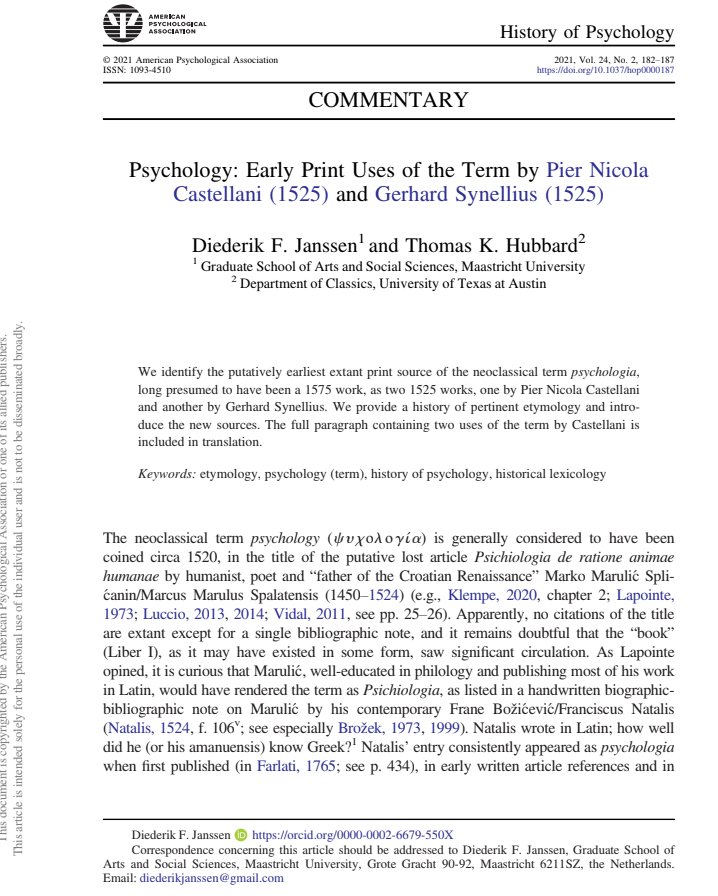
- Early print uses of the term by Pier Nicola Castellani (1525) and Gerhard Synellius (1525) (Janssen & Hubbard, 2021)
Pier Nicola Castellani (1525)
Pier Nicola Castellani (1525)
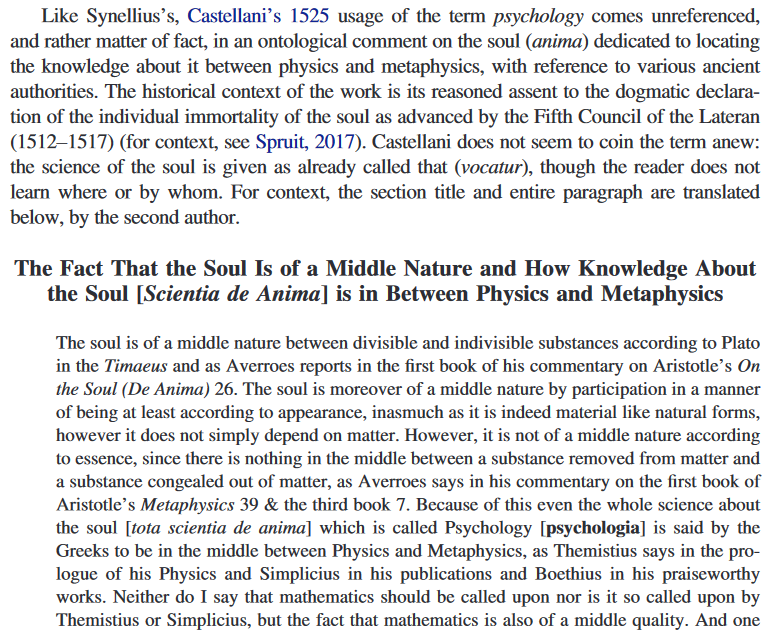
Pier Nicola Castellani
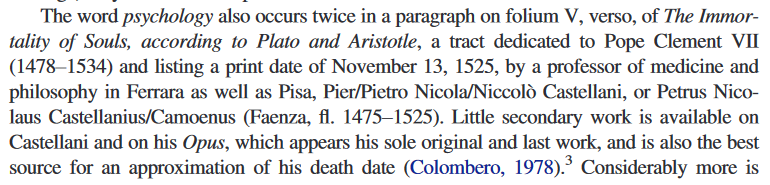
- Italian philosopher and humanist (active in the period 1475–1525)
- Early uses of the term psychologia (psychology) at 1525
- linking it to the study of the soul in discussions on immortality after the Lateran Council
- Important contributions to Renaissance debates on the intellect
Gerhard Synellius
- Dutch-born Benedictine monk, theologian, and humanist scholar who served as the Abbot of the Benedictine double monastery of Marienthal in the early 16th century
- He published a work in 1525 that contained one of the earliest known print uses of the neoclassical term psychologia.
- His 1525 work was titled Hortulus orationum metrico-dramaticus
- His use of the term psychologia in the context of an ontological comment on the soul (anima) between physics and metaphysics; Psychologia Synneliana
Thomas Freigus
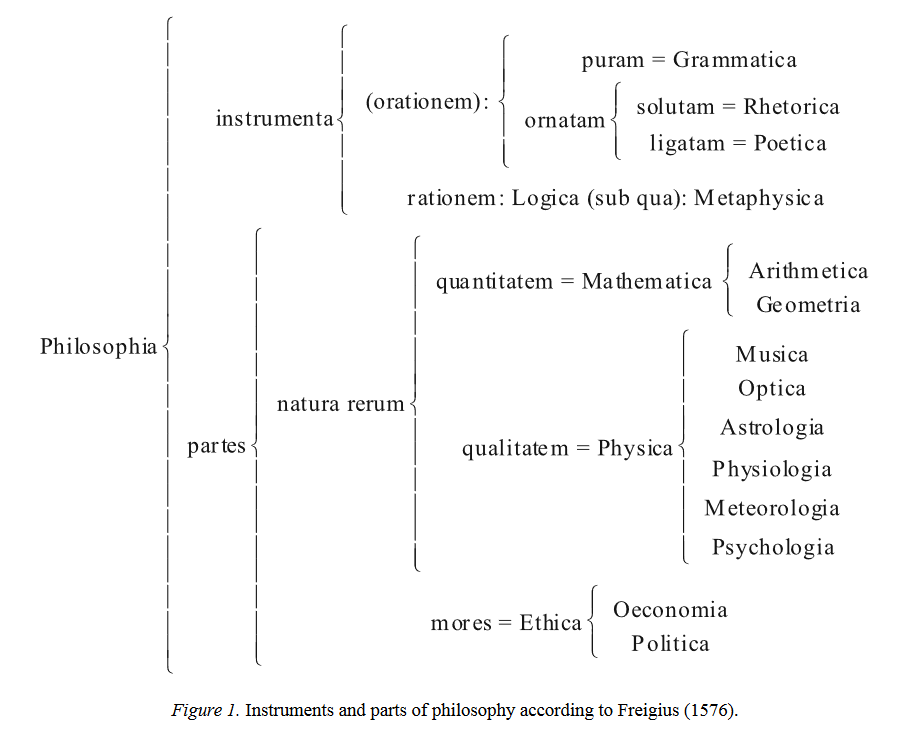
- Johann Thomas Freigius (1543–1583) was a German humanist, legal scholar, and professor influential in logic, ethics
- Freigius introduced the term “psychologia” into print in works; Questiones logicae et ethicae (1574) and Ciceronianus (1575)
- Placing the study of the soul within a logical and philosophical context
- Ramist Influence: adopted Peter Ramus’s logical methods, emphasizing clear, systematic presentation.
Thomas Freigius
Rudolf Goclenius the Elder (1547-1628)
- he used a slightly different form of the Greek word psyche: yuch
- Yuchologia: hoc est De hominis perfectione, animo et in primis ortu hujus, commentationes ac disputationes quorundam theologorum & philosophorum nostrae aetatis
- Radical new idea in this title: author used the term or form animo which refers to animus instead of anima
- In that title he emphasized the mental faculties of the soul (animus) as opposed to the more spiritual aspects of the soul (anima).
- Klempe (2020) point out that is crucial distincion: that had been absent for nearly 1000 years
Rudolf Goclenius
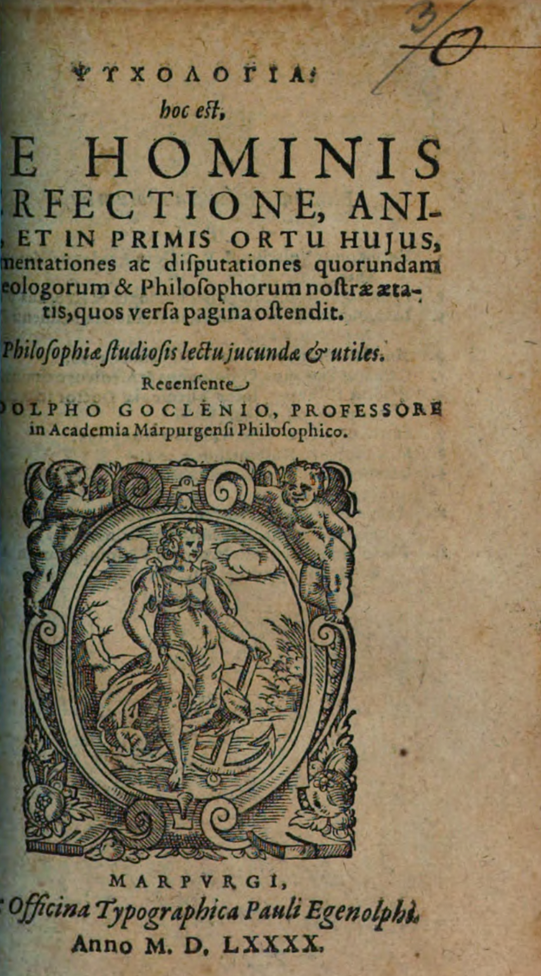
Rudolf Goclenius the Elder
- Confusion in the use of the term soul through history
- Klempe (2020) think that confusion has primarily been linked to the relationship between the intellectual (animus) and spiritual (anima) aspects of the soul
- This perspective highlights the intellectual abilities and the secular mind
Animus and Anima
- In the seventh century, one of the last Church Fathers, Isidor of Seville, declared that the intellectual and spiritual aspects of the soul should be considered two sides of the same entity (Klempe, 2020; Vidal, 2011)
- Confusion in the use of the term “soul” through history
- This confusion has primarily been linked to the relationship between the intellectual (animus) and the spiritual (anima) aspects of the soul (Klempe, 2020)
- On that point of view is importan Goclenius use the term psychology. On the first place because of highlights the intellectual abilities and the secular mind.
The Protestant Scholasticism and the Rise of Hermeneutics
- Hermannus Vultejus (1555-1634) thematized the Goclenius’ publication according to the soul
- Member of German noble family near Marburg and associated with Protestant University
- He also have had a focus on Plato’s dialogue Timaeus
- Francois Junius (1545-1602) born in Bourges, France… town of Jean Calvin (1509-1564) converted to Martin Luther thoughts and confronted Catholicism
- F.J. - how sin ais inherited. Time by which the Protestant Scholasticism rise…
Lutherans Versus Calvinists and Human Nature
- One of the major issues of scholasticism was related to the original sin, and more specifically to how sin actually is inherited
- This question became even more relevant to Goclenius’ anthology, which focused specifically on how the soul could be understood and possibly include both an intellectual and a spiritual aspect.
- Traducianism was supported by those who thought it was an uninterrupted line from when God breathed life into Adam and to all people thereafter, where the soul thus given to Adam by God was passed down through generations.
Lutherans Versus Calvinists and Human Nature
- Creationism, which argues that the soul is not inherited, but is created when each person is conceived.
- Calvinists were committed to creationism
- Goclenius anthology represent more Calvinistic Viewpoint
The function of the neologism Psychology
- Psychologia was not the only neologism relating to the soul to be coined in the context of the theologico-naturalist debates of the sixteenth and seventeenth centuries (Vidal, 2011)
- The Reformers contested two thories about the soul after death: that of the sleep of the soul (Fifth Lateran Council, 1513) and that of the death of the soul (thnetopsychism, thnetos - mortality)
- Fifth Lateran Council credo: Cardinal Egidio da Viterbo in 1512 during the inaugural oration of the Fifth Lateran Council: “Homines per sacra immutari fas est, non sacra per homines.” “Men Must Be Changed by Sacred Things, and Not Sacred Things by Men”
Psyche neologisms
- Position of John Calvin (1509-1564) in the book Psychopannychia: the soul is immortal - retains its powers of perception and intellection after death!
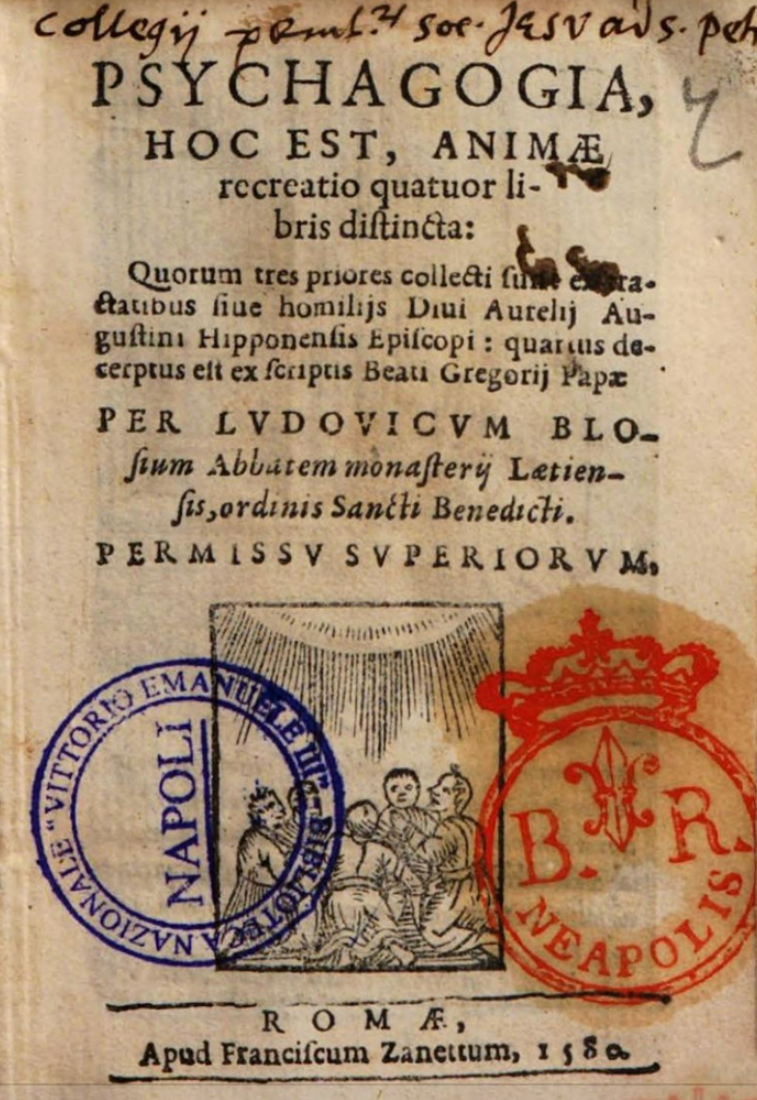
- Psychagogia: comes from ancient Greek philosophy, Plato used it to refer to “the manner of leading the soul through words.”
- Psychagogy mostly retained its association with techniques aimed at moral self-improvement
- Psychagogy still exist in 20th century: French and German specialists began to incorporate psychagogic methods in their work with character psychology. In 1924, an International Institute for Psychagogy and Psychotherapy was founded by the Swiss psychoanalyst Charles Baudouin.
Modern Psychology roots in 16 c. Why?
- Reformed theology broke so fundamentally with philosophy
- The concept of the soul therefore remained central because the understanding of it became absolutely crucial for the extent to which theology and philosophy could separate and move in different directions (Klempe, 2020)
- The lack of division between the mental faculties (animus) and the spiritual aspect (anima) of the soul which the church had focused on for nearly a thousand years had given theology a superior position
Modern Psychology roots in 16 c. Why?
- Reformed theology’s demand that the spiritual life generally had to be seen as separate from, and independent of, philosophy.
- Battle between creationists and traducianists
- Release the soul’s mental faculties from the theological question
References
Janssen, D. F., & Hubbard, T. K. (2021). Psychology: Early print uses of the term by Pier Nicola Castellani (1525) and Gerhard Synellius (1525). History of Psychology, 24(2), 182–187. https://doi.org/10.1037/hop0000187
Klempe, S. H. (2020). Tracing the emergence of psychology, 15201750: A sophisticated intruder to philosophy. Springer International.
Krstić, K. (1964). Marko marulić - autor termina psihologija. Acta Instituti Psychologici Universitatis Zagrebiensis, 35-48, 7–13.
Sternberg, R. J., & Pickren, W. E. (2019). The Cambridge Handbook of the Intellectual History of Psychology. Cambridge University Press.
Vidal, F. (2011). The sciences of the soul: The early modern origins of psychology. University of Chicago Press.