The Origins of Psychological Thought: Antiquity
Goran Kardum
2024-10-25
Why?
- 7th century BC to 5th century AD, and relevant to the lands around the Mediterranean Sea
- the questions about psychology have been asked thousands of years
- Western psychology has its roots among the ancient Greeks
Why?
- One of many historians (MacLeod, 1975) suggested that the period from 600 to 300 BCE in Greece represents one of the freat creative periods in human history (King et al., 2016)
- early speculations about the nature of natural sciences and human existence
- Bias!: cultural and historical (almost methods!)
Early Chinese Psychology
- We cannot count on divine intervention because nature goes its own way (Hsun Tzu, 298-212)
- Concepts of yin and yang
- Yang: force, hardness, masculinity, heat, dryness
- Yin: weakness, softness, feminity
- Chi energy: balance and health (diet, herbs, Tai Chi: balance of yin and yang)
- Chinese thought: mind plays a dominant role; body acts as its servant
Egypt
- Science cannot be easily separated from religion (King et al., 2016)
- Object of worship: animals, sun, mun, stars, plants mountains, rivers
- Heart as the seat of cognitive activity
- Brain was subservient to the heart
- Recognized the emotional disorder (Greeks later called hysteria)
India
- Vedas (knowledge) - sacred books
- Upanishads - philosophical knowledge
- Desease: devils, imbalance of humors
- Charms, chakras, meditation
- Yoga and meditation: quiet spirit
- Yoga: not only practice. That’s part of religion (King et al., 2016)
Hebrews
- Monotheism contrasted with the polytheism of Babylonians, Egyptians and Greeks
- Roots of psychiatry (Freud also!) are traced to ancient Israel (Ben-Noun, 2004) according to King et al. (2016)
- Disorganized behavior: Daniel 4:33
- Anger or Jehovah: cause mental illness (Deut 28:28) (historical and religious explanation: https://www.youtube.com/watch?v=T-El-Z_YaAU)
- Practiced infanticide as other ancient tradition (sacrifice)
Greece
- arround from 600 to 300 BCE
- Explosion of intellectual curiosity (We’re not really sure how it happened!) (King et al., 2016)
- The earliest hints of naturalistic psychology are found in the Greek mind!
- Greek cosmologists speculated about many topics of psychology!
Pythagoras (570-495)
- He coined the term philosophy (philo - love, sophia - wisdom). One who loves knowledge.
- Shifted the perspective from cosmology to an interest in human problems!
- All things in the universe have numerical qualities
- Psych have mathematical entity
- Brain as a seat of mental life
- He was used music as therapy as first among Westerners
Pythagoras
- Believed in immortality and transmigration of souls
- Important for inclusion of woman
- Pythagoras wife Theana - education activity
- Daughter Myia: moderation and balance
- Physical and mental health: result from harmony, balance theory of health
Pythagoras
- one of the famous in the Western intellectual tradition (Benjafield, 2015)
- The concept of harmony: central in in Pythagorean thought.
- The square root of 2 cannot be expressed as a single number; it is an irrational number. (The problem of irrationality)
- the golden section, golden ratio, divine proportion: a famous proportion in the history of Western thought: a more beautiful proportion in Western society
- (1 + Square root of √5)/2, often denoted by the Greek letter ϕ or τ.
Pythagoras (570-495)
- Number four - (Klibansky et al., 2019)
- Ancient doctrine of the Four Humours (dominate in psychology and physiology)
- Pythagoreans regarded the number four as specially significant
- Nature, brain, heart and even the soul later (intellect, understanding, opinion and perception)
- Pythagoreans prepared the ground by postulating a series of tetradic categories (earth, fire, water, air; spring, summer, autumn, winter)
Hippocrates (460-377 BCE)
- Empirical approach, founder of medicine (brief era of enlightenment) (King et al., 2016)
- Naturalistic view of all disease
- To treat a patient you must restore balance (intelligence result of balance: fire and water)
- Fire: impulsive person
- Water: stupidity
Hippocrates (460-377 BCE)
- Dreams represent the activity of the soul
- Awake: the body is awake the soul is its servant
- Dream: the soul being set in motion
- Dreams as indicator of illness
- The greater contrast between awake and dream: the great the illness
- The most important: balance theory
Socrates (469-399)
- On of the great figures. Important questions: nativism vs empirism
- Plato dialog to Socrates (Meno) Can you tell me, Socrates: is virtue something that can be taught? Or does it come by practice? Or is it neither teaching nor practice that gives it to a man but natural aptitude or something else? (Benjafield, 2015)
- His best-known student - Plato
- Self-knowledge is vital to virtue
Socrates (469-399)
- State that virtue is so difficult to define
- Innate knowledge
- Nosce te ipsum (know yourself)
- Rational thinking and introspection
- Where is this sign located in our city?
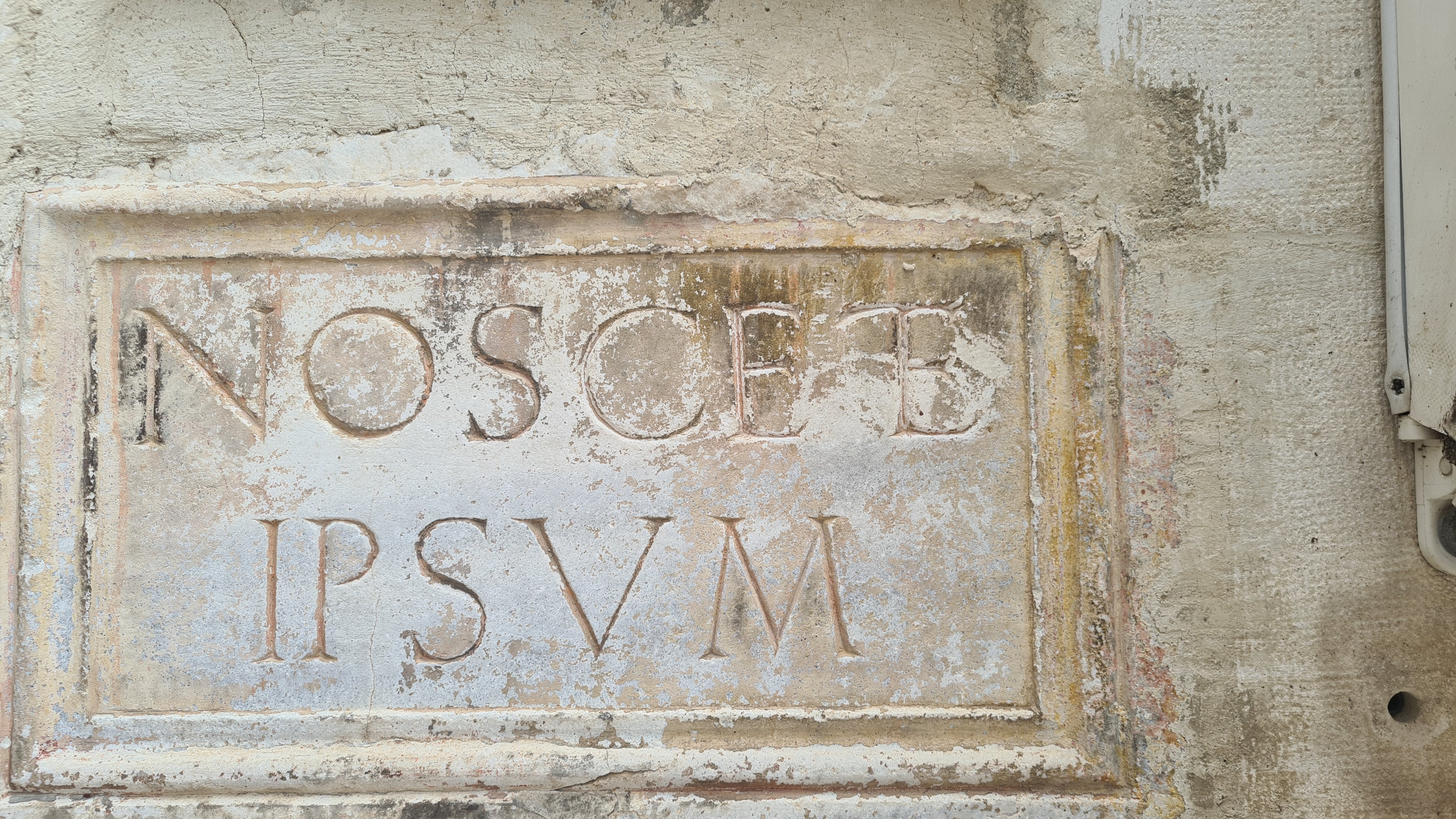
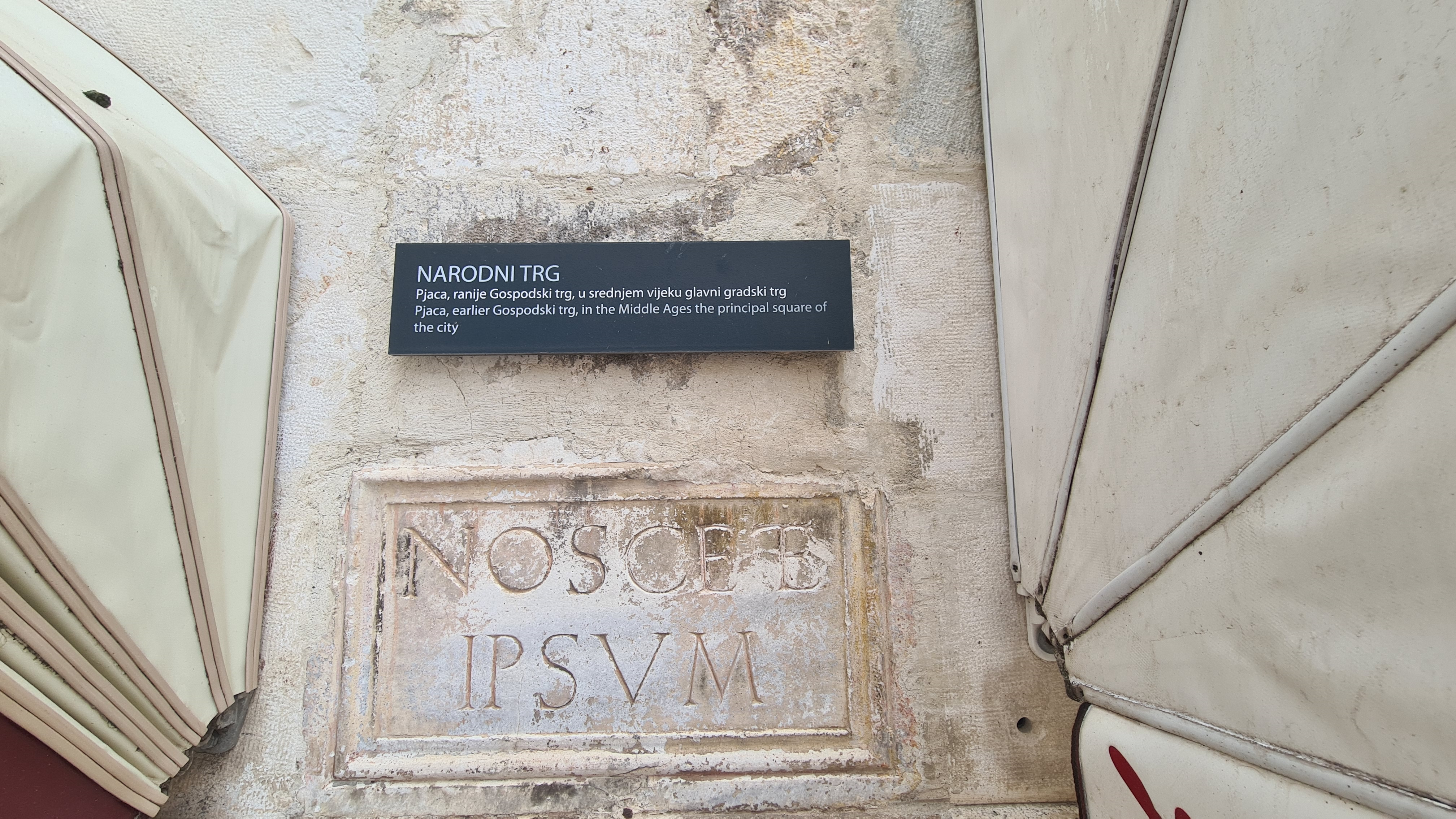
Γνῶθι σεαυτόν (gnōthi seauton)
Antiquity
- Widespread discussion of the relationship between soul and body
- Materialism (atomism): the human soul is not possible without the body, the mental is explained in physical terms
- Idealism: the existence of an independent, immaterial substance such as the psyche, the soul, is possible
Democritus
- Circa 460 to 370 BC
- The most influential Greek philosopher of materialism
- The soul is made up of atoms and cannot survive death
- Polycentric theory of the soul because it is located in three areas: the brain, heart, and liver
- Our behavior is influenced by external stimuli
- Among the first to ask the question: Is there such a thing as free will?
Plato (427-347)
- The problem of irrational as Pythagoras
- Belief in ideal forms, perfect forms. The perfect forms vs imperfect
- Plato was present at Socrates trial and witnessed his teacher’s death
- Method of Plato: He believed rational processes provide true knowledge, wheres sensory information alone offers only appearance and opinion.
- The eye of the soul: perceives the real world of forms throught memories, images, and higher cognitive functions.
Plato (427-347)
- Plato beleive in immortal soul (psyche) (Phaedo, Fedon in Croatian language, important book for understanding the conception of death and immortality of the soul)
- Higher (waking) and lower (sleeping) mental activities
- Psyche, three major functions: the rational soul, affective soul, appetite soul (the gut)
- Body and psyche: separate entity
Soul conception (important!)
Plato conception about Soul as a self-mover;
- If: the soul can move itself
- Then It: can also serve as its own source of life and activity
- Then It: can continue to exist after the dissolution of the body it happens to inhabit (Carter, 2019)
Soul in the dark cave
- The Republic, souls are chained like prisoners in a darkened cave
- Unable to see real world
- Only the reason help with knowledge of real world of forms
Plato and innate knowledge
- Learning as recollection (anamnesis): soul is immortal and has prior knowledge. Learning is not the acquisition of new information but only recollection of innate knowledge
- Cognitive, mental processes is not solely derived from sensory experience (Carl Jung draw theory of archetypes regarding Plato theory of Forms)
Tripartite of the soul
- Polypsychic conceptions (meaning): soul, psyche, mind or self is not a single, unified entity, but is instead composed of multiple, distinct parts
- Rational part (Logistikon); intellect making logical decision
- Sprited part (Thumos): honor, glory, seat of emotion
- Appetitive part (Epithumetikon); bodily desires, insticts, food, sex, drink. For Plato the most dangerous part of the soul.
Love
- Platonic vision of love is dominant in Western society
- Higher and lower forms of love
- Eros, erotic love - enslave people to their passions
- Soul have capacity to higher forms of love
- Search for the beauty!
Plato and mental health
- Immorality is to the soul what disease is to the body (Seeskin, 2008)
- Proper balance is needed to maintain a healthy body, the same is true of the soul.
- Internal conflict produce psychic dysfunction
Mental disorders
- According to Socrates, Plato beleive that psychological forces (Three source of disorders) involved in mental disorders
- Irrational thoughts dominate the mind
- Discord among rational, appetitive, and affective part of the psyche
- Ignorance result mental problems
Therapy
- Philosophy become a kind of therapy
- Talking cure
- Influence of learning
Aristotle (384-323)
- rejected Platos theory of forms
- Peri Psyches (About psyche)
- Aristotle argued that form and matter were intertwined (hylomorphism). Matter does not exist without form, nor does form exist without matter
- Aristotle observed that substances had the potential to take on different forms
- The distinction between a living and a dead body is that the former has what Baumrin calls “a soul:’ (Benjafield, 2015)
Aristotle
- Aristotle was particularly interested in the syllogism.
- A syllogism consists of two premises and a conclusion, and in a valid syllogism the conclusion follows necessarily from the premises.
- Practical syllogism. We use practical syllogisms when the conclusion drawn from the two premises becomes an action
Concept of the soul
- Aristotle is in a remarkable historical situation when he begins his inquiry (ἱστορία) into the science of soul (ψυχή) (Carter, 2019)
- soul must be a substance (οὐσία), and a substance in the sense of a form (εἶδος), as opposed to a material (ὕλη)2 or form-material composite, and a form in the sense of a fulfilment (ἐντελέχεια) of a material’s potentiality
- But the soul is the cause (αἰτία) and the first principle (ἀρχή) of the living body.
Hylomorphic theory of nature
Hylomorphism can be expressed as a theoretical commitment to two principles (Carter, 2019): 1. there are four fundamental kinds of explanatory causes in the world – the formal, final, efficient, and material cause (the first three of which can be identical), 2. all natural substances in the section of the cosmos residing below the moon are ultimately analysable into at least two of these causes: a specific material (ὕλη) and its form or organisation (μορφή).
Hierarchy of the psyche
- Elementary level: nutrition function
- Sensitive function
- Movement function
- Unanswered question in Aristotle about nature of the soul: transcendent and immortality!
Aristotle
- Contribution to memory and intelligence
- Aristotle’s most important contributions: association are produced by similarity, contrast, and continuity
- Theory of intelligence: theoretical intelligence, practical intelligence and productive intelligence
Memory, sensing
- makes distinction between memory and recollection
- mistakes in memory: because of numbers of associations
- one of the first that study perceptual illusions
- Aristotle’s most important contributions: association are produced by similarity, contrast, and continuity
- Theory of intelligence: theoretical intelligence, practical intelligence and productive intelligence
- writing about phantasia or imagination
Air, breath, wind
- Pythagoreans, Democritus: are reported and claimed that the soul is like motes (ξύσματα) in the air (or something in the air that moves the motes) (Carter, 2019)
- Diogenes of Apollonia: Men and other animals live in virtue of air through breathing (ἀναπνέοντα) and this is to them life (ψυχή) and thinking (νόησις). plants cannot breathe, they cannot have intelligence.
- De Anima: the observable phenomenon of breathing is essential to explanation of how soul enters (and stays within) the body
Dualism
- Aristotle theory about soul correlate with the Orphic respiration theory of soul
- De Anima is some kind of ingredient in a mixture (i) exist prior to that mixture and (ii) be a kind of thing capable of coming into physical contact with whatever it is mixed with (Carter, 2019)
- Parts of the Universe vs. Parts of the Soul (difficulty to explain the mixture of substances, the importance of the air)
- Cremate, buried, funeral practice: because of fear that someone could back from world of deaths
References
Benjafield, J. G. (2015). A history of psychology (4th ed.). Oxford University Press Canada.
Carter, J. W. (2019). Aristotle on Earlier Greek Psychology: The Science of Soul (ebook). Cambridge University Press.
King, D. B., Viney, W., & Woody, W. D. (2016). A history of psychology : Ideas and context (Fifth edition.). Psychology Press.
Klibansky, R., Panofsky, E., & Saxl, F. (2019). Saturn and Melancholy: Studies in the History of Natural Philosophy, Religion, and Art. McGill-Queen’s University Press.
Seeskin, K. (2008). Plato and the origin of mental health. International Journal of Law and Psychiatry, 31(6), 487–494. https://doi.org/10.1016/j.ijlp.2008.09.004